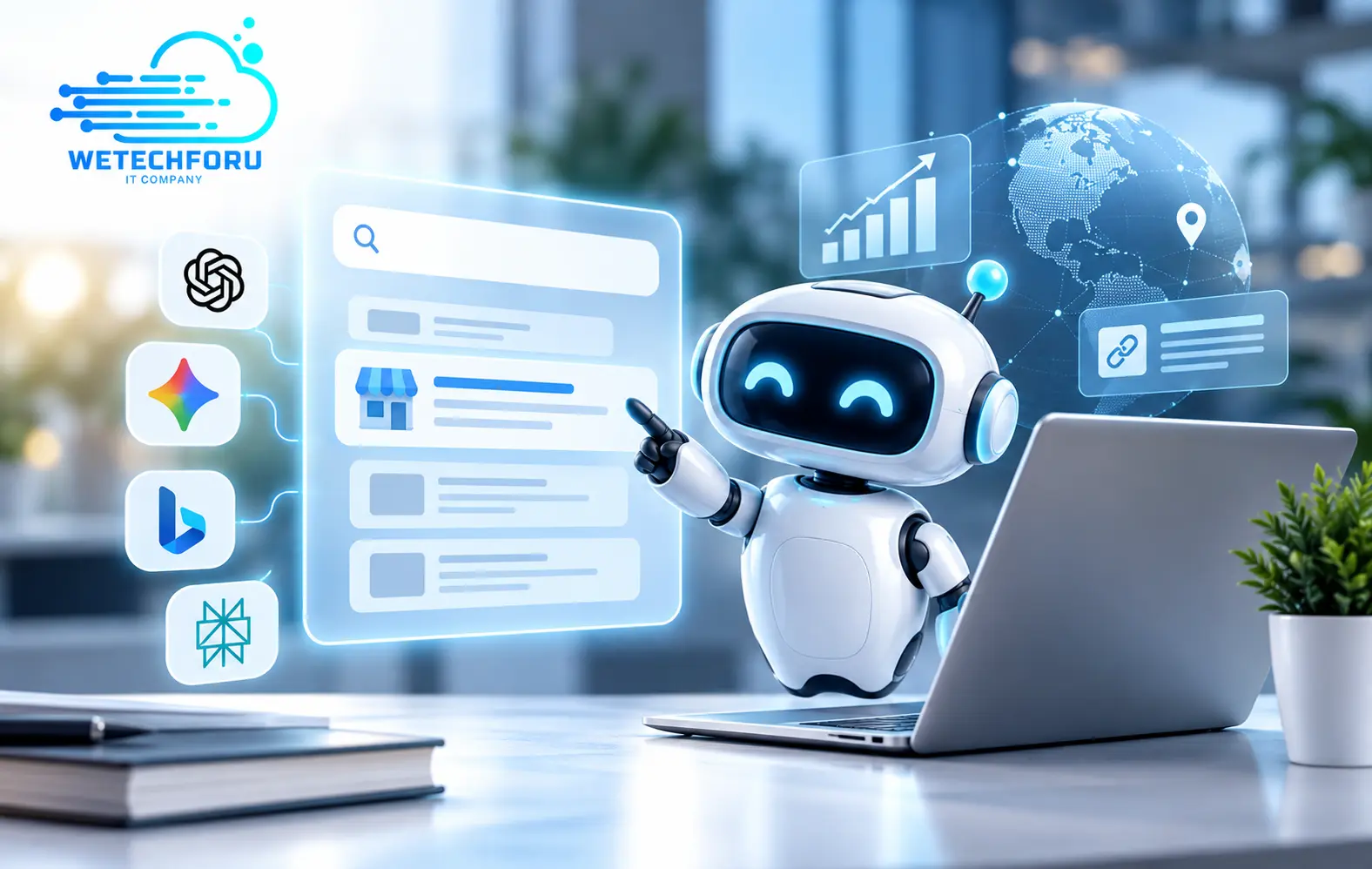
Search is changing from a list of blue links into direct, AI-generated answers. People increasingly ask platforms such as ChatGPT, Gemini, and Google AI features complete questions and expect a concise answer rather than manually opening several websites.
That shift creates a new visibility opportunity for businesses: answer engine optimization (AEO).
AEO focuses on making your business information clear, useful, trustworthy, and easy for AI-powered search systems to understand and reference. It works alongside traditional SEO rather than replacing it. Google itself continues to emphasize fundamentals such as crawlability, useful content, structured data, and search-quality guidelines, while ChatGPT Search retrieves web information and provides links to sources.
For businesses that want to remain visible as search evolves, understanding AEO is becoming increasingly important.
What Is Answer Engine Optimization (AEO)?
Answer engine optimization (AEO) is the process of optimizing your website and online presence so AI-powered search and answer systems can understand, extract, and potentially cite your content when answering user questions.
Traditional SEO generally focuses on helping pages appear prominently in search engine results. AEO focuses more heavily on whether your content can become part of an AI-generated answer.
For example, instead of searching:
“IT services company near me”
a potential customer might ask:
“What should a small business look for when choosing an IT support company?”
An AI search system may gather information from multiple sources, synthesize it, and provide an answer with citations or links. ChatGPT Search, for example, can search the web and provide links to relevant sources.
This means businesses need content that does more than target keywords. It should directly answer meaningful questions and establish the company as a credible source.
If you want to evaluate your current digital presence, you can explore WeTechForU and its services to see how an IT-focused business can structure its online presence around customer needs.
AEO vs SEO: What Are the Differences?
AEO and SEO overlap significantly, but they have different primary objectives.
| SEO | AEO |
|---|---|
| Focuses on visibility in search results | Focuses on visibility in AI-generated answers |
| Targets search queries and keywords | Targets questions, entities, topics, and conversational intent |
| Emphasizes rankings and organic traffic | Emphasizes mentions, citations, and AI visibility |
| Uses technical SEO, content, links, and authority | Uses those fundamentals plus clear, answer-focused content |
| Optimizes pages for search engines and users | Optimizes information for users and AI systems |
The important point is that AEO is not a replacement for SEO. Strong technical SEO and high-quality content remain important because AI search systems need to discover and retrieve information before they can potentially use it. Industry guidance also identifies substantial overlap between SEO and AI-search optimization.
A business should therefore approach AEO as an extension of its broader search strategy.
How Does AEO Work?
AI-powered search systems can retrieve information from websites and other online sources, evaluate the information, and generate a response.
For example, ChatGPT Search can formulate search queries, retrieve relevant web results, and use those results to produce an answer with sources.
Your goal is not simply to “rank #1.” Instead, your content should make it easy for an AI system to identify:
- What your business does
- Which locations you serve
- Which products or services you provide
- What questions you can answer
- Why your information is trustworthy
- How your information relates to a user’s question
This makes information architecture and content clarity especially important.
How to Show Up in ChatGPT Search Results
There is no guaranteed formula for getting a particular website cited in ChatGPT. OpenAI states that ChatGPT Search ranks results using multiple factors and that placement is not guaranteed. Websites can, however, make themselves eligible for inclusion by allowing OAI-Searchbot to crawl their site and ensuring their hosting or CDN permits the relevant OpenAI search traffic.
Businesses should therefore concentrate on the fundamentals.
1. Make Your Website Crawlable
Search systems need to access your website before they can use its information.
Check:
- Robots.txt settings
- XML sitemap
- Indexability
- Canonical URLs
- Server availability
- Internal links
- Mobile accessibility
- Page loading performance
Avoid accidentally blocking important pages from search crawlers.
2. Create Direct Answers
Write content around real customer questions.
Instead of writing a generic article titled “IT Services,” create useful resources such as:
- What does managed IT support include?
- How much does IT support cost for a small business?
- When should a business outsource IT support?
- What cybersecurity services does a small business need?
- How often should business systems be backed up?
Each question should receive a direct, accurate answer before the article expands into supporting information.
Your WeTechForU blog can serve as a content hub for this type of question-focused strategy.
3. Establish Business Context
AI systems need to understand entities and relationships.
Clearly communicate your:
- Business name
- Services
- Locations
- Industries served
- Contact information
- Expertise
- Company history
- Service areas
A detailed About page can help provide additional context about the organization behind the content.
How to Rank in Google AI Overviews
Google AI Overviews and other generative search features are integrated into Google Search. Google continues to emphasize its existing search fundamentals for AI features rather than requiring a separate secret optimization system. Its documentation covers AI features alongside other search appearance features and continues to emphasize structured data and understanding page content.
To improve your chances of appearing in AI-generated search experiences:
Answer the Query Clearly
Put the direct answer near the beginning of the relevant section.
For example:
What is managed IT support?
Managed IT support is an ongoing technology service in which an IT provider monitors, maintains, secures, and supports a company’s technology systems.
Then explain the details.
This structure gives both readers and automated systems a clear definition.
Build Topic Depth
One article rarely establishes comprehensive topical authority.
Instead, create related content covering:
- Definitions
- Comparisons
- Costs
- Benefits
- Problems
- Solutions
- How-to guides
- FAQs
- Industry-specific questions
Connect these resources with relevant internal links.
Use Structured Data Where Appropriate
Structured data helps Google understand information on a webpage. Google states that structured data can help its systems understand page content and potentially support richer search appearances.
Use appropriate schema rather than adding markup simply for the sake of adding it.
Generative Engine Optimization (GEO) Strategy
Generative engine optimization (GEO) is closely related to AEO and generally refers to optimizing content and online presence for AI-generated responses.
A practical GEO strategy includes four major areas.
First, create authoritative content. Publish original, accurate information that genuinely answers questions.
Second, strengthen your entity signals. Make your business name, services, locations, expertise, and other important information consistent across your website and relevant third-party sources.
Third, earn credible mentions. References from reputable websites can provide additional context around your business and expertise. Research into GEO continues to evolve, and recent experiments have examined how external mentions and sources can affect AI visibility.
Fourth, keep information current. Outdated pricing, services, locations, statistics, or business information can reduce usefulness and potentially undermine trust.
Content Structure Matters for AEO
AEO-friendly content should be easy to scan and understand.
A strong article structure typically includes:
- A clear H1
- A short introduction
- Question-based H2 headings
- Direct answers
- Supporting explanations
- Relevant statistics or examples
- Bullet points where appropriate
- FAQs
- Relevant internal links
- Clear calls to action
Avoid hiding the actual answer beneath several paragraphs of unnecessary introduction.
For example, if the heading is “What Is AEO?”, answer the definition immediately.
This approach benefits users while also making important information easier to identify.
Why Internal Linking Is Important
Internal linking helps users navigate your website and helps search engines understand relationships between pages.
For example, a technology company can connect an educational article about cybersecurity to its cybersecurity service page, then connect that service page to its contact page.
This creates a logical path:
Question → Educational content → Service → Contact
Businesses can use their services page to explain individual offerings and then direct interested visitors toward the contact page.
Internal linking should always be contextually relevant rather than added simply to increase the number of links.
AI Search Optimization Services for Businesses
Businesses that want to compete in AI-powered search may consider AI search optimization services for businesses as part of their digital marketing strategy.
A comprehensive approach can include:
- Technical SEO auditing
- Content optimization
- Question-based keyword research
- Entity optimization
- Internal linking
- Structured data implementation
- Local SEO
- Digital PR and authority building
- AI visibility monitoring
- Content refreshes
- Competitor analysis
The exact strategy depends on the business, industry, audience, geographic market, and existing website authority.
The objective should not be to manufacture content specifically for AI systems. Instead, businesses should create genuinely useful information that works for people first while remaining technically accessible and understandable to search systems.
AEO Is an Ongoing Strategy
AI search is still developing rapidly. Search platforms continue to change how they retrieve, summarize, cite, and display information.
Google has continued updating its documentation around generative search features, while OpenAI continues expanding and refining web search capabilities.
That means AEO should not be treated as a one-time website modification.
Businesses should regularly:
- Review important pages
- Update outdated information
- Publish new question-focused content
- Improve internal linking
- Monitor search visibility
- Check how AI systems represent the business
- Correct inaccurate information
- Strengthen authoritative third-party mentions
The businesses that adapt their content strategy alongside search technology can create more opportunities to be discovered across traditional and AI-powered search experiences.
Frequently asked questions
What is answer engine optimization?
Answer engine optimization is the practice of improving a website’s content and online presence so AI-powered search and answer systems can better understand, retrieve, and potentially cite its information. AEO focuses heavily on direct answers, clarity, authority, and conversational search intent.
Is AEO replacing SEO?
No. AEO and SEO overlap and should generally be used together. Technical SEO, crawlability, useful content, internal linking, and authority remain important foundations. AEO adds greater emphasis on making information easy for AI systems to understand and incorporate into generated answers.
How can I get my business cited by ChatGPT?
There is no guaranteed method for earning a citation. Make your website accessible to OpenAI’s search crawler, publish accurate and useful information, answer customer questions directly, and build a credible online presence. ChatGPT Search uses multiple factors when selecting search results, so citation placement cannot be guaranteed.
How do I rank in Google AI Overviews?
Focus on strong search fundamentals, useful content, clear answers, appropriate structured data, and strong topical coverage. Google does not provide a separate guaranteed ranking formula for AI Overviews. Its search documentation continues to emphasize the same core principles of helping Google understand useful website content.
What is the difference between AEO and GEO?
AEO generally emphasizes appearing in direct answers, while GEO broadly refers to optimizing a brand’s content and online presence for generative AI systems. The terminology overlaps, and different marketers use the terms somewhat differently. Both focus on visibility within AI-generated search experiences.
Do small businesses need AEO?
AEO can be relevant to businesses of any size because potential customers increasingly use conversational search to research products, services, companies, and problems. A small business can begin by answering common customer questions, maintaining accurate business information, improving its website structure, and creating useful local and industry-specific content.
Can AEO help local businesses?
Yes. Local businesses can make their location, service areas, services, contact information, and business details clear and consistent across their website and relevant online profiles. Location-specific questions can then be addressed through useful local content and service pages.